
Blog
EPC14783759: Meaning, RFID Tracking, and Uses

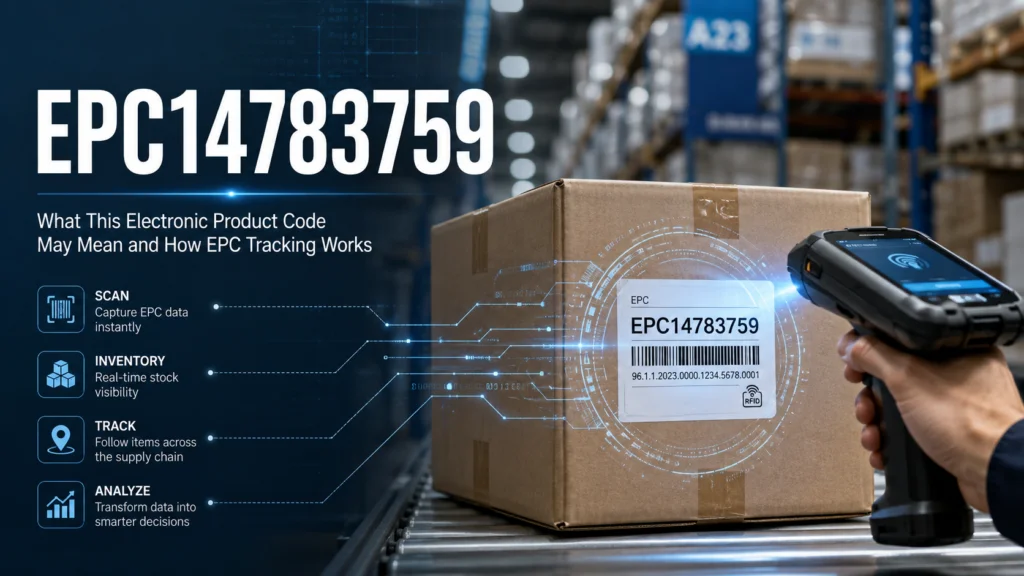
EPC14783759 appears to be a code linked to an Electronic Product Code (EPC). EPC codes help businesses identify and track physical items. Companies use them in factories, warehouses, stores, and shipping systems.
However, EPC14783759 is not a confirmed GS1 product code. Its exact meaning cannot be verified without knowing where it came from and how it was created.
Electronic Product Codes often work with RFID technology. An EPC identifies an item, while an RFID tag stores the code so a reader can detect it.
Not every code starting with EPC is an official product identifier. It may also be an internal reference, stock number, or database ID.
What Is EPC14783759?
EPC14783759 is a code made up of the letters “EPC” and a series of numbers.
It may be used as:
- An inventory reference
- An internal asset number
- A database ID
- A test code
- A product tracking reference
There is no verified public GS1 record linking this exact code to a specific product, manufacturer, shipment, or company.
EPC technology itself is well established.
GS1 uses Electronic Product Codes to identify individual physical objects. These may include products, business assets, shipping units, and other items.
Each serialized EPC helps identify one specific object.
The meaning of EPC14783759 depends on the system that created and uses it.
What Does EPC Mean?
EPC stands for Electronic Product Code.
It is a digital identifier used to tell physical items apart.
A normal product number may identify a group of identical products. A serialized EPC can identify one item within that group.
For example, a store may have hundreds of identical products. Each product can have its own serialized identity.
This helps businesses track individual items rather than only counting product types.
EPC systems often use GS1 identifiers, including the Global Trade Item Number (GTIN).
When a GTIN is combined with a serial number, it can identify one specific product unit.
This is useful for stock control, shipping, and product tracking.
Is EPC14783759 an RFID Tag Number?
EPC14783759 may be linked to an RFID system. However, an EPC and an RFID tag are not the same thing.
The difference is simple:
- EPC: A code that identifies an object.
- RFID tag: A small device that can store the code.
- RFID reader: A device that reads data from compatible tags.
- Business software: A system that uses the code to find item records.
An RFID tag can be attached to a product, package, or business asset.
When a reader detects the tag, it receives the stored information. Software can then match the identifier with a database record.
EPCs can also appear in digital records without showing the physical tag.
For this reason, seeing EPC14783759 on a screen does not prove that it is the exact code stored on an RFID tag.
How Electronic Product Codes Work
Electronic Product Codes help connect physical objects with digital records.
The process starts when a business assigns a unique identifier to an item.
That identifier can be stored on an RFID tag. The tag is then attached to a product, carton, pallet, or other object.
A basic EPC tracking process works like this:
- A business assigns an identifier to an item.
- The identifier is stored on an RFID tag.
- A compatible reader detects the tag.
- Software receives the identification data.
- The system matches the code with a database record.
The database may contain product details, stock location, shipment status, or other information.
The EPC does not need to store all these details.
Instead, it can act as a key that helps software find the correct record.
This lets businesses track items while keeping most information in their own systems.
What Information Can an EPC Contain?
The information stored in an EPC depends on the code format.
GS1 has different EPC schemes for different types of objects.
One common format is the Serialized Global Trade Item Number, known as SGTIN.
An SGTIN combines a product identifier with a serial number. This helps businesses identify one physical unit.
Some EPC encoding formats also use headers and other fields.
Common information linked to EPC systems includes:
- Product identification
- Serial numbers
- Company identification
- Asset references
- Shipping unit identification
Not every EPC contains the same fields.
The GS1 EPC Tag Data Standard explains the approved formats and how they work.
EPC14783759 cannot be decoded with confidence from its visible text alone. Its source and code format must be known first.
Why Businesses Use EPC Tracking
Businesses use EPC tracking to identify goods as they move through supply chains.
Large companies may handle thousands of products each day. Workers receive stock, move items, pack orders, and send shipments.
Recording each movement by hand takes time.
RFID systems can help collect identification data automatically.
For example, an RFID reader may detect compatible tags as products pass through a warehouse area.
This can reduce the need to scan each printed barcode by hand.
EPC tracking can support:
- Faster stock checks
- Better item identification
- Less manual data entry
- More accurate movement records
- Easier inventory control
The results depend on the system.
Tag placement, reader quality, software setup, and work processes all affect how well RFID tracking works.
A poorly designed system can still produce missing or incorrect records.
EPC Codes and Inventory Accuracy
Inventory accuracy means keeping stock records in line with the items a business actually has.
This can be hard when products move between storage areas, stores, and shipping points.
A missed scan or incorrect entry can cause stock records to become inaccurate.
Serialized EPC identifiers help businesses track individual units.
For example, a normal stock record may show that a warehouse has 20 units of one product.
An EPC-based system can identify the individual units when they have serialized tags.
This makes it easier to check which items arrived, moved, or left.
A code like EPC14783759 could serve as an internal reference in such a system.
However, that use has not been confirmed for this exact string.
The code becomes useful when it is linked to a valid business record.
EPC Tracking in Warehouses and Shipping
Warehouses use electronic identification to track goods during storage and shipping.
Products may receive EPC identifiers during manufacturing or packaging.
RFID readers can then capture tag data at different points in a facility.
For example, a warehouse may use readers when goods:
- Arrive at a loading area
- Enter storage
- Move between work zones
- Reach packing stations
- Leave for delivery
The same approach can help manufacturers, retailers, and shipping companies.
EPC identification is not limited to retail products.
GS1 standards also support identifiers for business assets, reusable transport items, documents, and other objects.
This means an EPC-related reference could belong to many types of items.
Without a verified source, EPC14783759 cannot be linked to one specific object.
Can EPC14783759 Track a Package to Your Door?
EPC14783759 is not a confirmed public parcel tracking number.
An Electronic Product Code and a courier tracking number serve different purposes.
Courier tracking numbers are often used on public delivery websites. Customers enter them to check a package’s status.
An EPC is mainly used to identify an object within a business system.
A company may connect EPC records with shipping information. However, this does not mean the code can be entered into a public tracking portal.
If you find an unfamiliar code on a shipping document, check the details around it.
Look for:
- The courier’s name
- A shipment tracking number
- An order number
- A product serial number
- A tracking website or link
If the code is still unclear, contact the business that issued the document.
It should be able to explain how the reference is used in its system.
EPC vs Barcode: What Is the Difference?
Barcodes and EPC-enabled RFID both help businesses identify products.
The main difference is how the information is read.
A barcode uses printed lines or patterns. A scanner reads the symbol using light.
RFID uses radio signals to communicate with a compatible tag.
Here is a simple comparison:
| Feature | Barcode | EPC-Enabled RFID |
|---|---|---|
| Reading method | Optical scanner | Radio signals |
| Direct view needed | Usually yes | Not always |
| Data carrier | Printed symbol | RFID tag |
| Multiple items | Usually scanned one at a time | May read several tags |
| Common use | Checkout and product scanning | Inventory and asset tracking |
Both technologies can work together.
For example, a product may have a printed barcode and an RFID tag.
The barcode helps workers or customers scan the item. The RFID tag supports automated identification.
Businesses choose between these methods based on their needs, costs, and equipment.
How Much Data Does an RFID Tag Store?
RFID tags do not usually store a product’s full history.
Many basic tags hold a small amount of identification data.
GS1 explains that common RAIN RFID identification tags may use 96-bit or 128-bit identifiers.
Some specialized tags can store more information.
However, businesses often keep full records in a separate database.
The tag may store an identifier, while software stores details such as:
- Product descriptions
- Stock locations
- Shipment records
- Item status
- Related business information
When a reader detects the tag, the system can find the matching record.
This keeps the tag simple while allowing businesses to manage larger records.
If EPC14783759 belongs to an RFID-based system, it may act as a reference rather than storing detailed product information itself.
Can You Decode EPC14783759?
EPC14783759 cannot be decoded reliably from the text alone.
To decode a standards-based EPC, you need to know its format and source.
GS1 provides an official EPC Encoder/Decoder for supported EPC formats.
The tool can help convert valid EPC data between different forms.
For example, some standard EPC URI values begin with:
urn:epc:id:
The rest of the value follows rules set by the GS1 EPC Tag Data Standard.
A simple string starting with “EPC” does not prove that it follows those rules.
EPC14783759 may be an internal database label, inventory reference, or another type of code.
Before trying to decode it, check where the number appears and which system created it.
Without that information, assigning a product or company to the code would be a guess.
Is EPC14783759 Safe or Suspicious?
EPC14783759 is not suspicious simply because it looks unfamiliar.
Businesses often use long codes to manage products, orders, assets, and records.
However, an unknown code should not be treated as proof that a message or website is genuine.
Scammers may use technical words such as EPC, RFID, inventory tracking, or shipping verification to make a message seem official.
Be careful if the code appears in an unexpected email, text message, or payment request.
You can check its source by following these steps:
- Confirm who sent the message.
- Check the company’s official website.
- Compare the code with your order details.
- Avoid unfamiliar payment links.
- Do not share passwords or private information.
- Ask the issuing company to explain the code.
A real technical term does not make every message using it trustworthy.
The safest approach is to verify the sender and the reason for the request.
What EPC14783759 Tells Us About Modern Logistics
EPC14783759 shows why context matters when dealing with digital tracking codes.
Modern supply chains use many identifiers to connect physical objects with software records.
Electronic Product Codes are one part of this process.
They help companies identify individual items and manage their movement through different systems.
RFID technology can support this work by reading compatible tags without manual barcode scanning.
Business software can then use the identifier to find stock records, shipment details, or other stored information.
GS1 standards provide common rules for EPC formats and their use.
However, the exact meaning of EPC14783759 remains unconfirmed.
There is no verified link between this visible string and a specific product, manufacturer, company, or delivery.
It is best described as a possible EPC-related or internal reference code.
To identify it correctly, the original source, issuing system, and format must be checked.
An identifier becomes useful when it is linked to a trusted record. Without that link, the code alone provides little information.
Read more: ABS Testauslösung: Find Why It Matters

Visaop is a term used to refer to the Visa Offers Platform, also known as VOP. It is a developer-focused service from Visa that helps banks, fintech firms, and other approved partners run card-linked reward programs. The platform can check qualifying purchases made with enrolled Visa cards and send transaction updates in near real time. This helps businesses offer cashback and other rewards without asking customers to scan receipts or enter coupon codes.
Visaop is not a bank, payment card, shopping app, or public rewards website. It works in the background and connects with the systems that businesses already use. A bank or fintech company can add its features to a mobile app, website, or loyalty program.
Customers can then receive offers and reward updates through the service they already use. They can pay with an enrolled card while the reward program checks whether the purchase meets the offer rules.
This guide explains what Visaop means, how it works, who can use it, its main benefits, and how it supports digital banking and customer loyalty.
Quick Facts About Visaop
| Topic | Details |
|---|---|
| Full name | Visa Offers Platform |
| Common abbreviation | VOP |
| Platform owner | Visa |
| Main purpose | Supporting card-linked reward programs |
| Main users | Approved Visa clients and business partners |
| Core function | Checking qualifying transactions for enrolled cardholders |
| Data speed | Near real time |
| Customer requirement | Consent and enrollment |
| Supported reward function | Statement credits, including cashback |
| Other possible rewards | Points and discounts through participating programs |
| Access type | Developer and business integration |
| Integration method | APIs |
| Payment network | VisaNet |
| Main uses | Customer loyalty, cashback programs, and merchant offers |
What Is Visaop?
Visaop refers to the Visa Offers Platform, a service that helps businesses connect Visa card payments with reward programs.
The idea is simple. A customer joins a reward program and enrolls an eligible Visa card. The customer then pays at a participating merchant. The platform checks whether the purchase meets the offer rules and sends the relevant transaction information to the business running the program.
The business can use this information to provide a reward. Depending on the program, that reward may be cashback, points, a discount, or another benefit.
For example, a bank could offer cashback to customers who spend a certain amount at a selected store. When an enrolled customer makes a qualifying purchase, the system can send a notice to the bank. The bank can then update the customer’s reward information under the program’s rules.
Visa’s official developer page explains that the platform can access relevant VisaNet authorization and settlement data for enrolled cardholders who have agreed to take part. It uses this information to support qualifying transactions and send related notifications.
What Does the Name Visaop Mean?
The name Visaop is commonly used to refer to the Visa Offers Platform. Visa’s official product name is usually written in full or shortened to VOP.
The abbreviation comes from three words:
- V: Visa
- O: Offers
- P: Platform
The term may appear in online searches, software discussions, and articles about digital rewards. However, VOP is the clearer name to use when looking for official product information or developer documentation.
Visa also provides other services that support offers and loyalty programs. These include the Visa Offers Network and the Visa Merchant Offers Resource Center. They have related goals, but each service has a different role.
How Does Visaop Work?
Visaop connects card transactions with the rules of a reward program. The business sets the offer conditions, and the platform helps identify purchases that meet them.
The process usually follows several steps.
A Cardholder Joins the Program
First, the customer agrees to take part in a reward program. The customer may join through a bank’s mobile app, a fintech service, or another approved platform.
The customer then enrolls an eligible Visa card, following the program’s instructions. This allows the system to check relevant future transactions against the offer rules.
Consent is important. Visa states that the platform operates on a consent-based model. Businesses must use it under the required cardholder consent rules.
The Customer Selects an Offer
Some programs ask customers to activate an offer before shopping. Others apply rewards after enrollment without requiring a separate action.
An offer might say, “Earn 10% cashback when you spend $50 or more at a selected store.”
The program records the conditions that determine whether a purchase qualifies. These may include the merchant, spending amount, offer dates, and reward limit.
The Customer Pays With the Enrolled Card
The customer shops and pays with the enrolled Visa card as usual.
There may be no need to show a paper coupon, enter a promotional code, or upload a receipt. The card transaction provides the link between the purchase and the reward program.
However, the customer must follow the offer terms. Paying with an enrolled card does not mean every purchase will earn a reward.
Visaop Checks the Transaction
The platform uses relevant transaction information from VisaNet to help determine whether a purchase meets the program’s rules.
Depending on the setup, the rules may consider the merchant, purchase amount, transaction date, and offer conditions.
This process can reduce the need for manual checks. It also helps the business identify qualifying purchases more quickly.
The Business Receives a Notification
When a purchase meets the required conditions, Visaop can send the relevant transaction information to the business in near real time.
The bank or fintech company may then display a notification in its app. The customer might see a message confirming that the purchase qualified for cashback.
The notification does not always mean the reward has already been paid. Some programs may wait for the transaction to settle or complete other checks before applying the reward.
What Are Card-Linked Offers?
Card-linked offers are rewards connected to a payment card instead of a paper coupon or a separate promotional code.
A customer enrolls a card and follows the program’s offer rules. When the customer makes a qualifying purchase, the system can connect that transaction to the reward.
This approach can make shopping easier because customers may not need to complete extra steps at checkout.
Card-linked offers can reduce the need to:
- Carry paper coupons.
- Enter promotional codes.
- Scan a separate loyalty card.
- Upload purchase receipts.
- Ask store staff to apply a discount.
For businesses, these offers can help connect promotions with actual card purchases. For customers, they can make it easier to use rewards through a bank or loyalty app.
The exact benefits depend on the program. Some offers require activation, while others may apply automatically after enrollment.
Who Can Use Visaop?
Visaop is designed for business clients and developers, not for people who want to download a public rewards app. Companies interested in using it must follow Visa’s access and integration process.
Several types of businesses may use the platform.
Banks and Card Issuers
Banks can use Visaop to support reward programs for their cardholders. They may display special offers or cashback opportunities inside their mobile banking apps.
For example, a bank could work with selected merchants to offer rewards on dining, travel, or retail purchases.
This can give customers more reasons to use their cards and help the bank improve its loyalty services.
Fintech Companies
Fintech companies can connect reward features to their digital services.
A fintech app might show eligible offers and notify users when a purchase meets the required conditions. This can add value to the app without requiring customers to use a separate rewards service.
The available features depend on the company’s agreement with Visa and its technical setup.
Loyalty Program Providers
Loyalty providers can use card transaction information to support programs that offer points, cashback, or other benefits.
This can reduce the need to ask customers for proof of purchase. It can also help the provider keep track of qualifying activity.
The provider remains responsible for explaining its reward rules and managing the customer experience.
Merchants and Offer Partners
Merchants may participate through a bank, fintech company, or another approved partner.
They can use card-linked offers to attract new customers, encourage repeat purchases, or promote seasonal deals.
The merchant’s role depends on the program. Some offers may involve direct merchant participation, while others may be managed through the business running the reward service.
Main Features of the Visa Offers Platform
Visaop provides several features that help businesses manage card-linked reward programs.
Near Real-Time Transaction Updates
The platform can send qualifying transaction information in near real time. This helps a business respond soon after a customer makes a purchase.
For example, a bank may send an app notification when a customer earns a reward.
Near real time does not always mean instant payment. The final reward may depend on settlement, program rules, and other checks.
Cardholder Enrollment
The platform supports enrollment for cardholders who have agreed to join a program.
Businesses can use its features to manage enrolled customers and their linked cards, subject to the relevant consent and access rules.
This helps ensure that transaction information is used within the agreed program.
Transaction Qualification
Visaop helps businesses identify transactions that meet predefined offer conditions.
These conditions may relate to merchant names, merchant categories, locations, online purchases, or other supported rules.
This allows a program to connect rewards with eligible purchases rather than relying only on manual claims.
API Integration
An API allows two software systems to exchange information.
Visaop provides APIs that approved clients can use to connect its functions with their own websites, mobile apps, and loyalty systems.
Customers may never interact with the platform directly. They may only see the offers, notifications, or reward details displayed by their bank or fintech provider.
Statement Credit Support
Visa’s platform includes a rewards function that allows approved clients to issue statement credits for qualifying purchases.
A statement credit reduces the amount owed on an eligible card account. Cashback programs may use this method to return money to the cardholder.
Points and other benefits may be managed by the wider reward program rather than directly by this specific platform function.
Authorization and Settlement Data
Visaop can use relevant VisaNet authorization and settlement information to help qualify transactions.
Authorization is the stage when a payment request is checked and approved. Settlement is the process through which the payment is completed between the relevant parties.
These stages provide information that can help a reward program track a purchase and apply its rules.
Benefits of Visaop for Cardholders
The main benefit for cardholders is convenience. After joining a program and enrolling a card, customers can continue paying as they normally would.
The reward system checks eligible purchases in the background. This can remove some of the extra steps found in traditional coupon and loyalty programs.
Possible benefits include:
- Less need to enter coupon codes.
- Fewer receipt uploads.
- Faster updates about qualifying purchases.
- Access to offers through a familiar banking app.
- Rewards linked to normal card use.
- Easier tracking of eligible purchases.
For example, a customer may shop at a participating store and receive a message from their bank about an eligible cashback offer.
However, customers should always read the offer terms. Minimum spending limits, expiry dates, eligible merchants, and reward caps may apply.
Benefits of Visaop for Businesses
Visaop can help businesses run reward programs with less manual work.
A bank may use it to encourage card use. A fintech company may add rewards to its app. A merchant may use card-linked offers to attract customers or encourage repeat visits.
Transaction-based qualification can reduce the need to process paper receipts or ask customers to submit claims for every purchase.
Near real-time updates can also improve the customer experience. A clear message about a qualifying transaction helps customers understand when an offer has worked.
Businesses may also review program results to understand which offers generate purchases and how customers respond. The data they can access depends on their permissions, agreements, and integration.
These benefits do not guarantee higher sales or customer loyalty. Results depend on the offer, the participating merchants, the customers, and how well the program is managed.
Visaop and Customer Privacy
Privacy is important because card-linked reward programs use information about payment activity.
Visa states that the Visa Offers Platform operates on a consent-based model. Cardholders must agree to participate before the service can be used for their program. Merchant consent may also apply, depending on the setup.
Customers should read the privacy policy of the bank, fintech company, or loyalty provider offering the program. It should explain what information is collected, how it is used, and which parties may receive it.
Customers should also check how to leave the program or remove an enrolled card.
Businesses must protect customer information, limit access to authorized staff, and follow the privacy laws that apply to their services.
Visaop provides the technical tools for a reward program. It does not remove the need for clear consent, responsible data handling, or suitable security measures.
Is Visaop Safe?
Visaop is an official Visa developer product. However, the safety of a reward program also depends on the business that uses it.
A well-managed program should use secure connections, suitable access controls, clear enrollment steps, and easy-to-understand terms.
Customers should join through a trusted bank, fintech company, or loyalty provider. They should be careful with unknown websites that promise free Visa rewards and ask for sensitive card details.
Visaop should not be confused with a public website that gives away cash or gift cards. It is a business service that supports card-linked programs.
If a reward offer seems suspicious, customers should contact their bank through its official website or app before sharing personal or payment information.
Visaop vs. Visa Offers Network
Visaop and the Visa Offers Network are related Visa services, but they have different roles.
The Visa Offers Platform focuses on qualifying transaction data for enrolled cardholders. It helps approved clients identify eligible purchases and support card-linked rewards.
The Visa Offers Network, or VON, is a marketplace that helps issuers and other approved partners distribute affiliate and card-linked offers to customers. Its features also support offer eligibility, transaction tracking, and reward management.
The main difference is their focus:
- Visa Offers Platform: Helps identify qualifying card transactions for a program.
- Visa Offers Network: Helps partners access, manage, and distribute offers.
The services can support similar business goals, but they should not be treated as identical products.
Visaop vs. Visa Merchant Offers Resource Center
The Visa Merchant Offers Resource Center is another Visa service that supports offer programs.
It provides a central place for approved users to access merchant offers. Its APIs allow businesses to retrieve offer information and display it on their own websites or mobile apps.
Visaop has a different focus. It helps clients work with qualifying transaction data and card-linked program activity.
In simple terms, the Merchant Offers Resource Center helps businesses access and display offer information. The Visa Offers Platform helps them connect eligible card transactions with reward programs.
A business should choose the service that matches its needs, available access, and technical requirements.
Limits and Challenges of Visaop
Visaop can make reward programs easier to manage, but businesses still face some challenges.
Restricted access: Companies cannot assume that anyone can sign up and use every feature. They must follow Visa’s access process and applicable terms.
Technical integration: Developers need to connect the APIs to the company’s systems. This requires secure software, testing, and ongoing support.
Offer rules: Businesses must define clear conditions for each offer. If the rules are confusing, customers may not understand why a purchase did not qualify.
Transaction changes: A payment can be reversed, canceled, or refunded. The reward program needs rules for handling these cases.
Customer support: Customers may need help when a reward is delayed or missing. Businesses should provide clear answers and explain how rewards are calculated.
These issues do not make the platform unsuitable. They show why careful planning and good program management are important.
Why Visaop Matters in Modern Fintech
Digital banking now includes more than checking balances and making payments. Customers may also expect useful alerts, special offers, and rewards through their banking apps.
Visaop helps approved businesses add card-linked rewards without asking customers to change how they pay.
The platform connects payment activity with merchant promotions and loyalty systems. A customer makes a normal purchase, while the reward program checks whether the transaction meets the offer rules.
For banks, this can support card use and customer engagement. For merchants, it can help connect promotions with qualifying purchases. For fintech companies, it can add reward features to existing services.
The main value is the link between a payment and a reward. When the program is clear and easy to use, customers can receive benefits without completing extra steps at checkout.
Visaop is not a complete loyalty business by itself. It is one part of the technology that helps approved companies build and manage these services.
Frequently Asked Questions
What does Visaop stand for?
Visaop refers to the Visa Offers Platform. Visa commonly uses the abbreviation VOP for this developer service, which helps approved clients run card-linked reward programs.
Is Visaop a mobile app?
No. Visaop is not a public mobile app. It is a developer platform that approved businesses can connect to their own websites, apps, and loyalty systems.
Does Visaop provide cashback?
The Visa Offers Platform supports statement credits, including cashback rewards for qualifying transactions. Other benefits, such as points and discounts, depend on the wider reward program.
Do customers need to enroll in Visaop?
Yes. Cardholders must consent to take part in the relevant program and enroll an eligible card under its rules. The exact process depends on the business offering the rewards.
Can any developer access Visaop?
No. Visaop is intended for approved business clients. Companies interested in using the platform should contact Visa and follow its access and integration requirements.
Final Thoughts
Visaop, also known as the Visa Offers Platform or VOP, helps approved Visa clients connect card transactions with reward programs. It can identify qualifying purchases and send transaction updates in near real time.
Its main benefit is convenience. Customers can enroll a card, shop as usual, and receive rewards when their purchases meet the program rules. Banks, fintech companies, and other approved partners can use the platform to support cashback, loyalty offers, and customer engagement.
Visaop is not a public shopping app or a standalone rewards website. It works behind the scenes as part of a wider service. Its success depends on clear offer terms, secure integration, customer consent, and good program management.
As digital banking develops, card-linked technology can help businesses connect payments and rewards in simpler ways. Visaop is one tool that supports this approach.
Read more: Coyyn: What Is It, How Does It Work, and What Features Does It Offer?

Coyyn is an online information platform that covers digital finance, banking, cryptocurrency, business growth, investments, and the gig economy. The website, Coyyn.com, publishes articles that help readers learn about money, technology, and modern business.
Despite its name appearing alongside terms such as Coyyn banking, Coyyn crypto, and Coyyn wallet, it is not a bank or cryptocurrency exchange. Its official website describes Coyyn as an editorial resource, not a financial service or investment platform.
This article explains what Coyyn is, how it works, its main features, and the topics it covers. It also looks at its safety, benefits, limitations, and the difference between Coyyn and real financial services.
What Is Coyyn?
Coyyn is a digital publication that shares information about finance, technology, investment markets, and business. It aims to make financial topics easier for everyday readers to understand.
The platform covers subjects such as digital payments, online banking, blockchain, cryptocurrency, private equity, and freelance work. Its content is useful for people who want to learn about these areas before making financial or business decisions.
Coyyn does not offer direct banking, trading, or investment services. The official site states that its purpose is to provide educational information rather than personal financial advice.
Why Is Coyyn Becoming a Popular Search Topic?
People search for Coyyn because its name appears with several financial terms. Common searches include Coyyn business, Coyyn banking, Coyyn crypto, Coyyn digital capital, and Coyyn app.
These terms can confuse readers. Some may expect to find an online banking service, while others may be looking for a cryptocurrency wallet or investment platform.
The main reason for this confusion is that Coyyn covers many financial subjects under one name. Its articles explain these services, but the website does not directly provide them.
Understanding this difference helps readers know what to expect before using the website.
Key Features of Coyyn
Coyyn offers several content features for readers interested in finance and business. Its main strength is bringing different financial topics together.
| Feature | What it offers |
|---|---|
| Financial articles | Guides about money, banking, and finance |
| Cryptocurrency content | Information about blockchain, crypto, and digital assets |
| Business resources | Articles about business growth and operations |
| Investment education | Information about capital, private equity, and investments |
| Gig economy coverage | Guides about freelancing and independent work |
| Topic categories | Organized sections for easier reading |
| Editorial contact | A way to send questions and feedback |
| Financial disclaimer | Explains that content is informational, not financial advice |
These are the features visible on Coyyn.com. The website does not confirm the availability of personal banking accounts, crypto trading, or digital wallet services.
How Does Coyyn Work?
Coyyn works like an online finance magazine. Readers visit the website, choose a topic, and open an article to learn more.
The website organizes its content into categories. These include cryptocurrency, digital finance, business growth, assets and investments, and the new economy.
Readers can explore subjects without opening a financial account. They can also use the website’s contact section to ask questions or send feedback.
The process is simple:
- Visit Coyyn.com.
- Choose a financial or business category.
- Find an article about your chosen topic.
- Read the information and explore other guides.
- Check important financial claims through trusted sources before acting.
Coyyn is mainly designed for reading and research. It is not a platform for storing, sending, or investing money.
Coyyn Digital Finance and Banking

Digital finance is one of Coyyn’s main subjects. The website publishes articles about online banking, mobile payments, financial technology, and modern money management.
These topics explain how people use digital tools to handle everyday financial tasks.
For example, online banking may allow customers to check balances, transfer funds, pay bills, and manage accounts through an app or website.
Coyyn discusses how such services work. However, it does not operate its own verified online banking service.
Its banking content may help readers understand:
- Online and mobile banking systems
- Digital payment methods
- Financial technology and banking changes
- Account security and online fraud
- Modern tools for managing money
Readers looking for an actual bank account should use an authorized financial provider.
Coyyn Cryptocurrency and Digital Assets
Cryptocurrency is another important topic on Coyyn. Its articles explain blockchain technology, cryptocurrencies, digital wallets, stablecoins, and the risks of crypto investing.
Digital currencies work differently from traditional money. Many use blockchain networks to record transactions and transfer value.
Coyyn publishes educational guides that explain these systems and their possible uses.
Its cryptocurrency coverage includes Bitcoin and other digital assets, wallet security, market risks, regulations, and different ways people buy or store cryptocurrency.
However, Coyyn itself is not a cryptocurrency exchange. It does not offer a verified trading interface, proprietary token, or crypto wallet through its official website.
Readers should not assume that articles about crypto products mean those products belong to Coyyn.
Coyyn Business and Growth Solutions
Coyyn also provides information for entrepreneurs, business owners, and people interested in starting a company.
Its business articles discuss operations, digital tools, financial planning, and ways companies may obtain funding.
Business owners often need to understand how technology can reduce costs, improve daily tasks, and support growth. Coyyn covers these subjects through educational content.
The main areas include business management, digital operations, private equity, funding concepts, and business technology.
Coyyn may help readers learn about these topics, but it does not visibly provide business loans, payment-processing accounts, or accounting software.
Coyyn Digital Capital and Investments
Digital capital is an important part of Coyyn’s content. The term refers broadly to capital and financial assets used or managed through modern digital systems.
Coyyn explains investment subjects such as venture capital, private equity, digital assets, and market trends.
Venture capital involves funding businesses that investors believe have strong growth potential. Private equity commonly involves investment in companies that are not publicly traded.
The website discusses these ideas to help readers understand how different financial markets operate.
It also covers other investment topics, including rare coins and alternative assets.
These articles provide background information. They should not be treated as personal investment recommendations or offers to invest through Coyyn.
Coyyn and the Gig Economy

The gig economy is another major subject covered by Coyyn. It focuses on people who earn money through freelance projects, short-term contracts, and independent work.
Examples include freelance writers, graphic designers, delivery drivers, online consultants, and other self-employed workers.
Coyyn publishes information about how this type of work is changing traditional employment.
The platform covers subjects such as finding freelance opportunities, managing income, running a small business, and using digital tools for work.
Its gig economy guides may be helpful for readers who want to understand independent work. However, workers should still check local tax rules, employment laws, and financial requirements.
Coyyn Compared With Banking and Crypto Platforms
Coyyn covers subjects that also appear on banking and cryptocurrency websites. However, these platforms have different purposes.
| Feature | Coyyn | Online Bank | Crypto Exchange |
|---|---|---|---|
| Financial articles | Yes | Sometimes | Sometimes |
| Personal bank accounts | No | Yes | No |
| Money transfers | No | Yes | Sometimes |
| Cryptocurrency trading | No | Sometimes | Yes |
| Digital wallet | No verified wallet | Sometimes | Often |
| Investment guides | Yes | Sometimes | Yes |
| Main purpose | Education | Banking | Crypto services |
Coyyn is useful for learning about financial products. Banks and cryptocurrency exchanges provide services that involve real money and financial transactions.
Readers should make this distinction before registering with any financial website.
Is Coyyn a Bank, Crypto Wallet, or Investment Platform?
Coyyn is not presented as a licensed bank, cryptocurrency wallet, or investment service on its official website.
The platform publishes information about these subjects but does not provide working financial accounts or trading tools.
There is no verified Coyyn cryptocurrency token, wallet download, trading dashboard, or customer deposit system on the official website.
This matters because some online descriptions suggest Coyyn offers advanced banking or blockchain services.
Such claims should be checked against official product details before being accepted as facts. Coyyn’s own editorial guide confirms that it does not directly provide banking, exchange, or investment services.
Is Coyyn Legitimate and Safe?
Coyyn.com operates as an information website with published articles, content categories, and an editorial contact section.
These features support its identity as a digital publication. However, they do not prove that every article is accurate or that other websites using similar names are trustworthy.
The platform also states that its content is informational and should not replace advice from a qualified financial professional.
Readers can use the site for general research, but they should check important financial information before making decisions.
Safety Tips When Using Coyyn
Although Coyyn is mainly a reading platform, basic online safety still matters.
- Make sure the website address is correct.
- Avoid unknown websites using similar names.
- Never share banking passwords or cryptocurrency private keys.
- Check financial claims against trusted sources.
- Be careful with websites promising guaranteed investment returns.
- Verify any app before installing it.
The Federal Trade Commission warns that promises of guaranteed cryptocurrency profits are common signs of fraud.
Who Should Use Coyyn?
Coyyn may be helpful for people who want to understand modern finance without starting with complex financial reports.
Its main audiences include beginners, freelancers, entrepreneurs, investors, and readers interested in financial technology.
A beginner may use Coyyn to learn what cryptocurrency means. A freelancer may read about managing irregular income. A business owner may explore articles about digital tools or business funding.
Experienced readers may also use the website to discover subjects worth researching further.
However, its articles should be treated as starting points rather than final answers to important financial questions.
Benefits of Using Coyyn
Coyyn provides several practical benefits as an educational platform.
One benefit is its broad subject coverage. Readers can find information about banking, business, cryptocurrency, and independent work on the same website.
Another benefit is its category-based structure. This makes it easier to explore subjects without searching through unrelated articles.
The platform also covers both traditional finance and new technology. This can help readers understand how digital systems affect banking, investments, and business operations.
Its main benefits include accessible financial content, varied topics, and resources for different reader groups.
Limitations of Coyyn
Coyyn also has limitations that readers should understand.
First, it is not a financial service provider. People who want to open accounts, buy cryptocurrency, or invest money must use other platforms.
Second, financial markets and regulations change often. Articles may become outdated, so readers should check publication dates and current rules.
Third, Coyyn’s website uses some wording that sounds like financial services are available. This may confuse visitors who expect actual banking or investment products.
The website could improve clarity by explaining its role more clearly across all pages.
What Could Coyyn Improve?
Coyyn could improve its usefulness by adding more detailed author profiles, visible editorial standards, and clearer explanations of its services.

Finance articles are easier to assess when readers can see where the information comes from.
Clear references to official financial regulators, market reports, and company announcements would help readers check important claims.
The site could also show article review dates and make its informational status more visible.
These improvements would help separate Coyyn’s educational content from actual financial products.
Final Thoughts
Coyyn is an online publication that focuses on digital finance, cryptocurrency, banking, investments, business growth, and the gig economy. It helps readers understand financial topics through articles and educational guides.
The key point is that Coyyn is not a bank, digital wallet, cryptocurrency exchange, or investment platform. Its main service is publishing information.
Readers may find Coyyn useful for learning basic financial ideas and discovering new subjects. However, important financial decisions should be based on verified information and advice from qualified professionals.
Frequently Asked Questions
What is Coyyn?
Coyyn is an online information platform covering digital finance, banking, cryptocurrency, investments, business, and the gig economy.
Is Coyyn a bank?
No. Coyyn is an educational website and does not offer verified banking accounts or deposit services.
Does Coyyn have a crypto wallet or mobile app?
No official cryptocurrency wallet or mobile banking app was verified on Coyyn.com during the review.
Is Coyyn.com safe to use?
Coyyn.com can be used to read financial articles, but readers should check important claims and avoid unverified websites using similar names.
Can I invest money through Coyyn?
No. Coyyn does not directly offer investment accounts, cryptocurrency trading, or brokerage services.

Veneajelu is a Finnish word that means a boat ride. It is often used for a fun or relaxing trip on a lake, river, or sea. Finland has thousands of lakes, many islands, and a long coastline. These natural features make boating a popular summer activity across the country.
A boat ride can be a short trip near a summer cottage, a family outing, or a sightseeing cruise. Some people enjoy quiet lakes, while others explore islands along the coast. This article explains the meaning of Veneajelu, its place in Finnish culture, popular boating spots, safety tips, and ways tourists can enjoy it.
What Does Veneajelu Mean?
The Finnish word Veneajelu means “boat ride” or “boat trip” in English. It comes from two Finnish words. Vene means “boat,” while ajelu refers to a ride or trip, often taken for pleasure.
Together, these words describe an outing on the water. The main purpose is often to enjoy the ride rather than travel to a set place.
For example, a family may take a small motorboat out on a lake. They might pass islands, admire the forest, and return to their cottage. This simple outing is a good example of Veneajelu.
The word does not describe one special boat or a formal Finnish event. It is an everyday term that can refer to many kinds of boat rides.
Veneajelu in Finnish Culture
Boating has an important place in Finnish outdoor life. According to Statistics Finland, the country has about 168,000 lakes covering at least 500 square metres. Its coastal waters and islands provide even more places to explore.
Many Finnish families also spend time at summer cottages, called mökki. These cottages are often near a lake or the sea. A boat may be used for fishing, visiting an island, or taking a short ride.
A typical summer day at a cottage may include swimming, cooking, using a sauna, and spending time outdoors. Boating is one activity that fits into this routine.
Veneajelu is not a special ceremony or holiday. It is a simple activity that reflects Finland’s close link with lakes, forests, and outdoor recreation.
Why Is Veneajelu So Popular in Finland?
Finland’s natural features are one reason boating is popular. Lakes are found in many parts of the country. Coastal towns also offer access to the Baltic Sea.
People enjoy boat rides for several reasons:
- To explore lakes and nearby islands.
- To spend time with family and friends.
- To enjoy fresh air and views of nature.
- To go fishing or visit summer cottages.
- To see coastal towns and landmarks from the water.
Long summer days also make boating appealing. During June and July, Finland receives many hours of daylight. In the far north, the sun stays above the horizon for part of summer.
The warm season gives people more chances to enjoy the water. During winter, many lakes freeze, which limits normal recreational boating.
Veneajelu and Finland’s Natural Beauty


A boat ride allows people to see Finland from a different angle. From the water, forests, islands, rocky shores, and summer cottages become part of the view.
Finnish Lakeland is one of the country’s best-known natural areas. It has a large network of lakes, waterways, and islands. Lake Saimaa, Finland’s largest lake, is a major attraction in this region.
Along Finland’s coast, boaters can explore smaller islands, sheltered bays, and open sea. The scenery changes from quiet inland lakes to rocky Baltic shores.
Wildlife is another attraction. Birds are common around lakes and coastal areas. Lake Saimaa is also home to the rare Saimaa ringed seal, a protected species found only in this lake system.
Visitors should watch wildlife from a safe distance and avoid disturbing animals.
Veneajelu as a Relaxing Experience
A calm boat ride can provide a break from busy daily life. People can enjoy the sound of water, look across the lake, and spend time outside.
A short trip does not need a full-day plan. Someone may take a boat around a small island or travel along a quiet shore before returning home.
The experience can be different for each person. Some prefer slow rides in small boats. Others enjoy longer cruises with views of towns, forests, and islands.
Weather plays an important role. Calm water and light wind often make a ride more comfortable. Strong waves or cold conditions can make the same trip less pleasant.
Veneajelu With Family and Friends
Veneajelu can be a shared outdoor activity. Families may take children on a short lake trip, while friends may plan an afternoon on the water.
A group might bring snacks, take photos, or stop at an island where landing is allowed. A family staying at a summer cottage may use a boat to explore the local area.
The length of the trip should suit everyone on board. Young children may be more comfortable on shorter rides in calm conditions.
Safety must come first. Every passenger needs suitable flotation equipment. The boat operator should also follow passenger limits and check the weather before leaving.
Best Time to Enjoy Veneajelu
The main boating season in Finland is during the warmer months. Late spring, summer, and early autumn can offer suitable conditions, depending on the region.
| Season | Boating conditions |
|---|---|
| May | Some boating services begin as waters become ice-free |
| June | Long days and the start of the main summer holiday season |
| July | A popular month for boating and cottage stays |
| August | Summer boating continues, though evenings become shorter |
| September | Some cruises still operate, but cooler weather can affect trips |
June, July, and August are good months for visitors who want a summer boating experience.
Still, warm weather is not guaranteed. Wind, storms, poor visibility, and cold water can create risks. Boaters should always check local forecasts before going out.
Popular Places for Veneajelu in Finland
Finland offers many places for leisure boating. The right location depends on whether someone prefers lakes, coastal islands, or city sightseeing.

1. Lake Saimaa
Lake Saimaa is a major destination for lake cruises. Savonlinna is a useful starting point for visitors who want to see wooded islands, waterways, and the historic Olavinlinna Castle.

2. Archipelago Sea
The Archipelago Sea near Turku is known for its many islands and narrow waterways. Visitors can enjoy coastal boat trips, island connections, and scenic views of the Baltic Sea.

3. Helsinki
Helsinki offers sightseeing cruises from its central waterfront. Some routes pass the Suomenlinna sea fortress, nearby islands, and historic coastal areas.
Other boating areas include the Åland Islands, Lake Päijänne, and Lake Inari. Each offers different scenery, conditions, and types of boat trips.
Different Types of Veneajelu
A boat ride in Finland can take several forms. The type of experience depends on the boat, destination, and purpose of the trip.
- Lake boat rides: Short or long trips across Finland’s inland lakes.
- Sightseeing cruises: Guided or scheduled trips that show visitors natural and historic landmarks.
- Private motorboat outings: Trips with family or friends in privately owned or rented boats.
- Sailing trips: Outings that use wind-powered boats on lakes or coastal waters.
- Island trips: Boat rides to visit islands, harbours, and places along the coast.
A rowing boat can also be used for a quiet outing near a cottage. Some people prefer larger passenger vessels that offer seating, guides, and food services.
Each type has different costs, equipment needs, and safety rules.
What to Bring on a Veneajelu?
Good preparation helps make a boat ride more comfortable. Even a short outing needs some basic items.
Important things to bring include:
- A correctly fitted life jacket or suitable flotation device.
- A light jacket or warm clothing.
- Drinking water and snacks.
- Sunscreen, sunglasses, and a hat.
- A charged phone protected from water.
- Any needed medicine or personal items.
- Navigation equipment when required for the trip.
The air can feel cooler over water than on land. Extra clothing may be useful during evening trips.
People using private boats should also check the fuel, boat condition, and required safety equipment.
Veneajelu Safety Tips
Safety is an important part of boating in Finland. Conditions can change, even during a short ride on a familiar lake.
Finland’s Transport and Communications Agency, Traficom, recommends checking the weather, boat condition, equipment, and route before leaving.
Some important safety tips are:
- Wear a life jacket. Use one that fits properly and is suitable for the activity.
- Check the weather. Avoid strong winds, storms, and dangerous waves.
- Know the route. Use suitable maps or navigation tools for unfamiliar waters.
- Stay sober. Never operate a boat while impaired by alcohol.
- Follow boat limits. Do not exceed the allowed passenger or load capacity.
- Check the equipment. Make sure the boat has the safety gear required by Finnish law.
- Tell someone your plans. Share your route and expected return time.
For emergencies on inland waters, call 112. Finland’s maritime rescue emergency number is 0294 1000.
The law requires approved flotation equipment for each passenger on motorboats and sailing boats over five metres long. Wearing a properly fitted life jacket is strongly recommended on all small watercraft, including rowing boats.
Veneajelu and Finnish Summer Traditions
Summer is an important time for outdoor recreation in Finland. Many people travel to cottages near lakes, forests, and coastal areas.
A stay at a cottage may include fishing, swimming, sauna, outdoor meals, and boating. A short boat ride can fit into almost any part of the day.
Midsummer, known in Finnish as Juhannus, is one of the country’s major summer celebrations. Many people spend the holiday at cottages or in rural areas.
Long evenings allow people to enjoy outdoor activities later in the day. In northern Finland, the midnight sun brings continuous daylight during part of the summer.
Veneajelu is not a required Midsummer tradition, but boating is one activity people may enjoy during the holiday.
How Veneajelu Supports Slow Travel
Slow travel focuses on spending more time enjoying a place rather than rushing from one attraction to another.
A boat ride can fit this style of travel. Visitors may spend an hour watching the shoreline, passing small islands, and seeing local scenery.
The trip does not need several stops or a long route. A short ride around a lake may be enough.
Boating can also help visitors learn about Finland’s natural areas. However, the environmental impact depends on the type of boat, fuel use, route, and behaviour of those on board.
Travellers can reduce disturbance by following speed limits, keeping noise low, avoiding protected wildlife areas, and taking rubbish back to shore.
Veneajelu for Tourists Visiting Finland
Tourists can enjoy Veneajelu without owning a boat. Many Finnish destinations have sightseeing cruises, scheduled island boats, guided tours, or rental services.
First-time visitors may find passenger cruises easier than renting a boat. These trips have an operator who handles navigation and controls the vessel.
For example, Helsinki has sightseeing cruises that pass coastal landmarks and nearby islands. Savonlinna also offers cruises on Lake Saimaa.
Before booking a boat trip, visitors should check the departure location, trip length, price, weather policy, and safety arrangements.
Tourists planning to rent a boat should also understand local rules. Some larger or more powerful vessels may have special requirements. Rental providers may ask about boating experience before allowing someone to operate a boat.
Final Thoughts
Veneajelu means a boat ride in Finnish. It is a simple activity closely linked with Finland’s lakes, coastal areas, islands, and summer cottage life.
A boat trip can be a short family outing, a sightseeing cruise, or a peaceful ride across a lake. Places such as Lake Saimaa, Helsinki, and the Archipelago Sea give visitors different ways to experience Finland from the water.
The best trips begin with good planning. Suitable weather, proper flotation equipment, and safe boating practices help make the experience enjoyable.
FAQs
What does Veneajelu mean in English?
Veneajelu means “boat ride” or “boat trip” in English and often refers to a leisure outing on the water.
Why is Veneajelu popular in Finland?
It is popular because Finland has thousands of lakes, many islands, and coastal areas suitable for recreational boating.
When is the best time for Veneajelu?
June, July, and August are popular months because of the warmer weather and long summer days.
Where can tourists enjoy Veneajelu in Finland?
Tourists can enjoy boat rides on Lake Saimaa, around Helsinki, in the Archipelago Sea, and in other Finnish lake regions.
What should you bring on a Veneajelu?
Bring a suitable life jacket, weather-appropriate clothing, drinking water, sun protection, and a charged phone.

Dabi x Reader Texts: Why These Fan-Made Text Stories Are So Popular

Visaop: What Is the Visa Offers Platform and How Does It Work?

Markiseteppe: The Hidden Comfort Secret for Better Outdoor Living

Who Is Preetha Nooyi? How Is Indra Nooyi’s Daughter Building Her Own Quiet Path in Business?

Freda Morris Biography: The Private Life of Garrett Morris’s Wife

Who Is Charlie McKittrick? All About Ana Gasteyer’s Husband and His Life
-
 Celebrity4 months ago
Who Is Preetha Nooyi? How Is Indra Nooyi’s Daughter Building Her Own Quiet Path in Business?
-
 Celebrity2 months ago
Freda Morris Biography: The Private Life of Garrett Morris’s Wife
-
 Entertainment4 months ago
Who Is Charlie McKittrick? All About Ana Gasteyer’s Husband and His Life
-

 News1 month ago
Arrow Eve Reynolds: The Oldest Daughter of Imagine Dragons Frontman Dan Reynolds and Musician Aja Volkman
-

 Business4 months ago
Who Is Vaughn Rasberry? All About Tatyana Ali’s Husband, Stanford Career, Family, and Net Worth
-

 Celebrity4 months ago
Who is Brock Peters’ First Wife? All You Need To Know About Dolores Daniels
-

 Celebrity2 months ago
Arielle Zuckerberg: Meet Mark Zuckerberg’s Youngest Sister, Building Her Own Tech Legacy
-

 Celebrity4 months ago
The Untold Story of Elgin Charles Williams: From Beverly Hills Hair Empire to Jackée Harry’s Ex-Husband